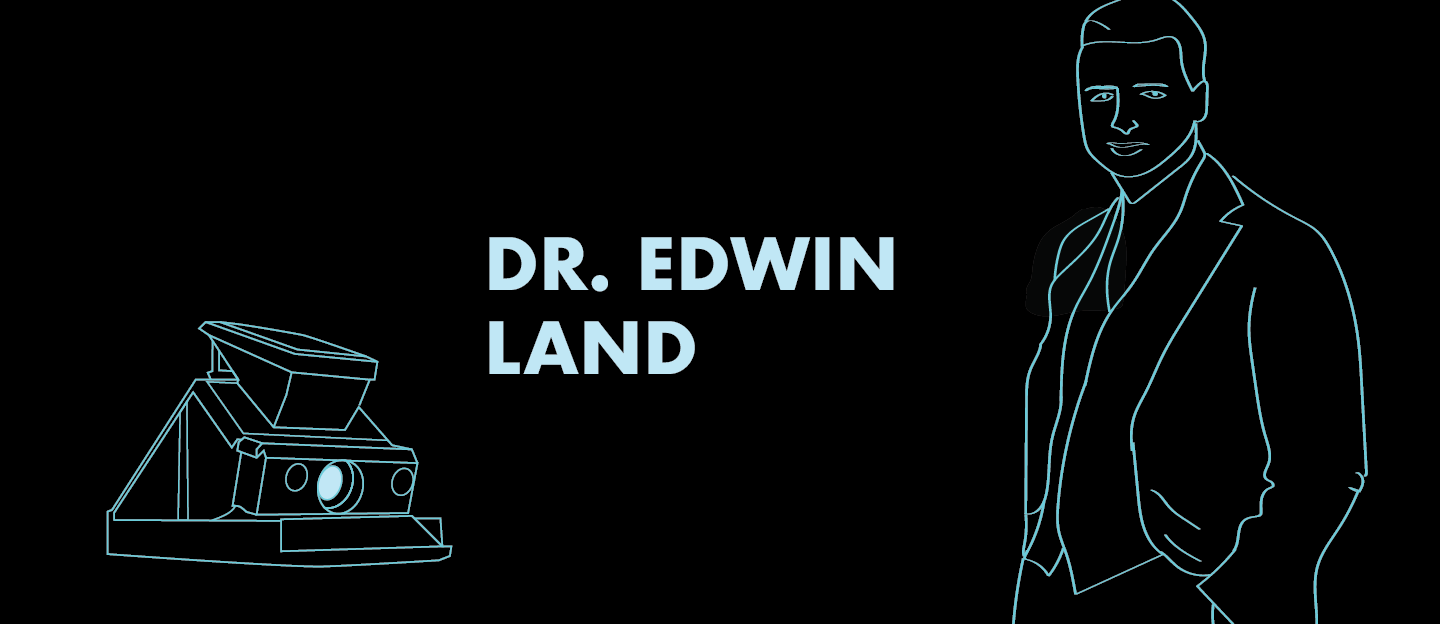
About Edwin Land
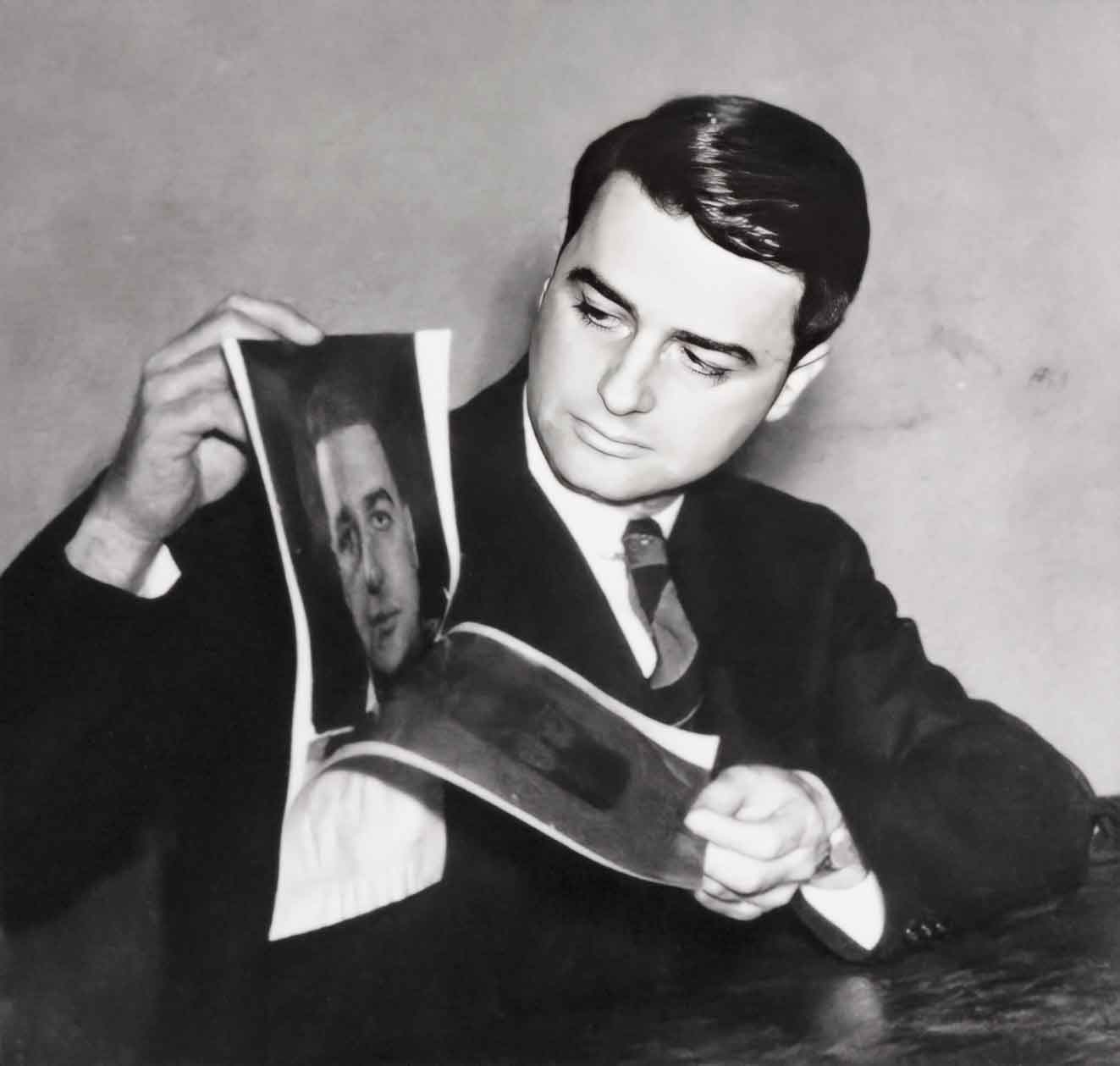
Sharp in a suit and tie, his dark hair perfectly coiffed, one look at Edwin Land is enough to tell that he is a man of business. Less apparent, yet deserving of even greater appreciation, is the brilliant mind that blazed behind that gelled cut.
Ever since childhood, Land, born in 1909, could not stop thinking. He would frequently take apart household appliances, once even blowing all of the house’s fuses when he was six years old. Another time, when his father lectured him for destroying a phonograph machine, rather than apologizing, Land vowed never again to let anybody stop him from completing an experiment, a promise which he carried with him throughout his life.
Graduating Norwhich Free Academy with honors, Land entered Harvard as a budding student in 1926. After studying optical physics for a year, Land left for New York City, where he invented the world’s first inexpensive filters capable of polarizing light, which he called Polaroid film. Partnering with his Harvard Physics instructor, George Wheelwright III, Land co-founded the Land-Wheelwright Laboratories in 1932 to mass-produce the film. After rebranding as Polaroid Corporation in 1937, Lands and Wheelwright secured a deal with Wall Street investors and were able to expand, creating products such as sunglasses, scientific work, color-animation jukeboxes, window shades, and more. His lenses even found militaristic application during World War II, with use in camoflauge goggles, smart bombs, and many more weaponry.
However, Land received what some may argue to be his most critical epiphany in Santa Fe, Mexico: during the family trip, Land’s 3-year old daughter asked him to take a picture of her. Once the photo was taken, she asked to see it -- in those days cameras had to be taken to a special store where photos would be processed and printed -- there was no way to view them beforehand. Jennifer didn’t understand this -- she wanted to see the picture now! Thus, Edwin Land had his most profitable idea: using his Polaroid film to create a camera that could print photos almost immediately, without the hassle of going out. In 1947 he demonstrated this concept with what he called the Land Camera, taking and printing a photo in less than 60 seconds. Consumers went wild -- citizens around the globe wanted these cameras, and Land’s company only kept growing.
Edwin Land was a brilliant, visionary man, and today his legacy lives on, pulsing through each of our fingertips with every click of a Polaroid camera shutter.