About Robert Parris Moses
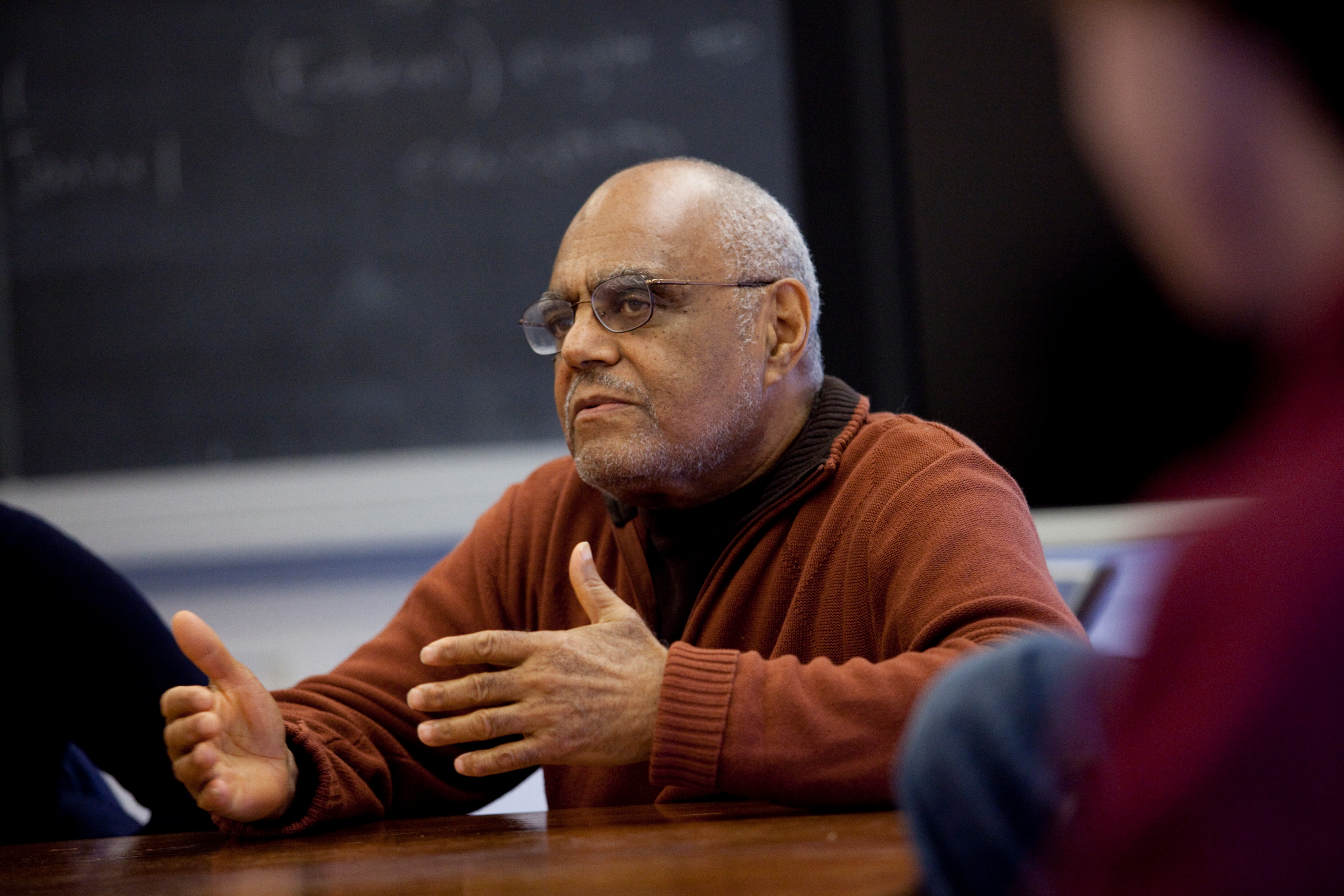
Bob Moses had always loved to learn. Born and raised in Harlem, Moses’ youth was peppered with trips to the public library, and he went on to complete an M.A. in philosophy at Harvard. While Moses planned to continue his studies with a PhD, his mother’s death and father’s hospitalization brought him back to the big city in 1958.
Rather than giving up to grief and lost dreams, Moses kept himself moving onward, finding a job teaching math at the Horace Mann School in the Bronx. It was there, perhaps motivated by the bleak future waiting for his students, that Moses began to work with civil rights activists: in the years following he became the director for the Student Nonviolent Coordinating Committee (SNCC) project in Mississippi, working to promote voting education and registration for people of color across the state. It was not an easy task -- after decades of oppression under Jim Crow, the political climate was devoid of diversity. However, Moses was intelligent, hard-working, and passionate-- and through his determined attitude he quickly made an impact and rose in the ranks, pairing his major role in the SNCC with a position as the co-director of the Council of Federated Organizations (COFO), an umbrella organization for the major activist groups working in Mississippi at the time. However, Moses didn’t feel comfortable in his new role, feeling that he had a greater impact as an independent activist, rather than the face of the movement. In late 1964, Moses left COFO, and following internal disagreements over the war in Vietnam, which he opposed, he left SNCC as well.
Shortly after, in 1966, Bob Moses was drafted into the Vietnam war, despite being 5 years past the cut-off. Suspecting government interference and unwilling to fight for a cause he didn’t believe in, Moses relocated with his wife and children, spending the following decade working with the Ministry of Education in Tanzania. Once amnesty was offered for draft resistors, Moses returned to the United States to study at Harvard -- after years of moving past the loss in his education, he could finally get back to philosophy. Not much later, in 1982, Moses received a MacArthur Fellowship. He already had a fitting purpose for the grant money in mind: at around the same time, his daughter attended the public Cambridge high school, where Moses was shocked to learn that they did not teach Algebra. In an effort to further math literacy, Moses used the award to create “The Algebra Project,” a nonprofit formed to teach advanced mathematics to minorities and economically struggling students.
To conclude: Bob Moses was revolutionary, a leader, a man who not only stood by his beliefs, but also acted on them. Life did not deal Moses an easy deck of cards, but despite all of his struggles, Bob Moses fought to promote a positive change in the world.